
Tired of working hard throughout the week, only to feel like you have no energy left over for yourself, your loved ones, and your passions?
As busy New Yorkers, our modern life and culture prioritizes working and hustling over rest and recuperation. The output does not match the input of energy. We get out of sync with what our body needs and with nature’s timing. Ongoing overwork and undernourishment leads to increased fatigue, stress, a weakened immune system, and lower quality of life as we age.
Regaining your energy is not achieved through superfood fads or relying on coffee.
It is a paradigm shift in which you:
🪷Reconnect with your mind, body, and spirit
🪷Address the underlying factors within your control to build your foundation of health
🪷Commit to ongoing routines that nourish you
🪷Bring yourself back into balance with nature’s rhythms throughout the seasons, months, and day
Traditional Chinese Medicine (TCM) offers holistic, time tested, and natural methods to protect and regain our energy.
Here are 6 tips that you start doing now:
1) Food therapy
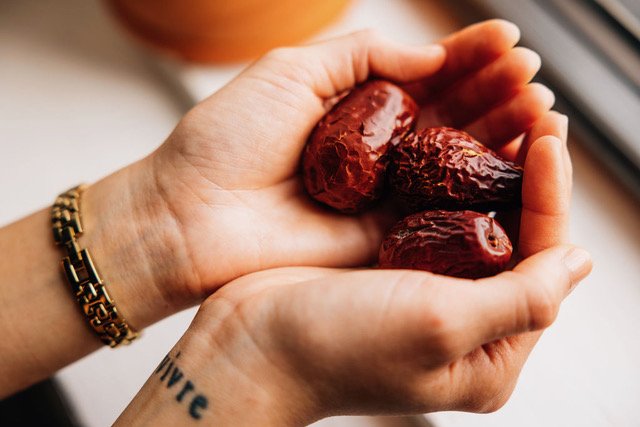
Food is medicine because it is what we eat every day. It is the foundation of our “post natal qi,” which is the fuel that we create from food and drink, so that we don’t need to tap into our deeper reserves.
Eating regular meals consistently supports our energy levels and our Spleen, which as a Chinese medicine organ system is responsible for digestion, which provides us with qi and blood. How you eat impacts how well you digest as well. Eating without distractions, chewing your food, relaxing your body, and eating with good posture all help improve your digestion.
Generally, eating warm, cooked meals takes less energy to digest. Keep processed sweets, raw and cold foods and drinks such as candy, cakes, ice cream, salads, juices, and smoothies to a moderation. Wheat, sugar, and alcohol contribute to many of our current modern diseases, and in TCM it exacerbates dampness and/or heat. Consume these foods in moderation, especially in their processed forms.
2) Aligning with the Time of Day for Eating and Resting
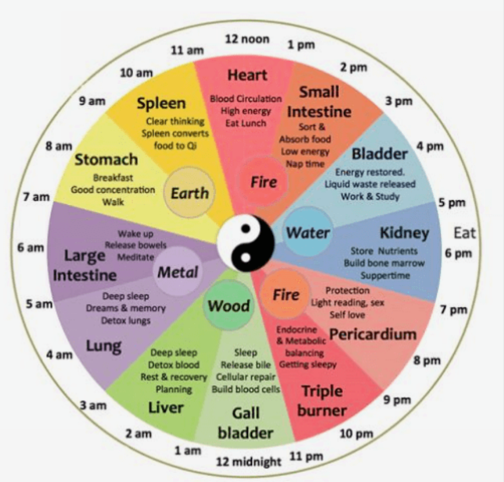
In a city that never sleeps, where there is more “lunch al desko” than lunch al fresco, we can get out of tune with nature’s timing throughout the day. According to Chinese medicine, each organ system correlates with a 2 hour time range, which gives us a roadmap of when are the most optimal times to eat, rest, move, and digest.
Breakfast time is 7-9am, which is the Stomach time. 9-11am is Spleen time, which is when your body is digesting breakfast and a good time for mental activity and exercise. Lunch time is 11am-1pm, which is Heart time. Dinner time is 5-7pm, which is Kidney time. By 11pm, which is the start of Gallbladder time, you should ideally be asleep for optimal rest and repair.
3) Aligning with the Season
Just as there are shifts throughout the day, there are shifts throughout the seasons that informs how we can preserve our energy and health. Since the summer solstice, which is the height of summer and peak yang, we have started to see the shift towards shorter days and longer nights. According to the 24 solar terms, which marks seasonal shifts throughout the year based on the lunisolar calendar, Autumn has already begun in August.
Autumn is associated with the Lung in Chinese Medicine, which is another organ system that works alongside the Spleen to provide us with energy through the breath. Now is the time to start resting earlier, focusing more inwards, tending to any grief that is coming up, and supporting our immune system by avoiding direct A/C or fan, eating warm meals, and keeping our bodies and necks covered as the temperature dips.
4) Acupressure on Stomach 36, An Essential Point for Fatigue
Stomach 36, or Zusanli (Leg Three Miles), is an important acupuncture point to nourish qi and blood. It supports the digestive function of the Stomach and Spleen, which are organ systems that provide us with the “post natal qi” nourishment through food and drink. Spend a few minutes each day to massage this point to improve fatigue!
5) The right amount of exercise
Exercise and movement is beneficial for everyone, but the type and intensity depends on each person’s TCM constitution, presenting patterns, and life circumstances such as how physically demanding their job is. If your fatigue improves with exercise, that's a sign that you have more qi stagnation and that the movement is helping. If you get overly tired after exercise, you may need to adjust your exercise intensity if you’re doing strength/cardio, adjust your food intake, and/or incorporate more gentle movement, such as yoga, qi gong, or tai chi.
6) Recenter & prioritize your joy
What gives you joy? What lights you up? The Shen, or spirit, is a vital substance that is housed in the Heart and governs your mind, consciousness, and emotional balance. You can see the state of someone’s shen through the aliveness in their eyes.
When we have a healthy shen, we feel vital, present, and connected. The shen also depends on having enough qi and blood, which is influenced by how we eat, move, sleep, and rest. Energy is not just about having physical energy– it is also important to make time for the things that bring us joy, connection, and creativity.
Implement these TCM tips and see your life change! I’ve experienced this myself and have seen this happen for patients too.
If you are seeking further support to improve your fatigue, with personalized care and recommendations specific to you, book an initial exam with Dr. Vivian Mac today.
Dr. Vivian Mac is a Doctor of Acupuncture and Chinese Herbal Medicine and member of the Brooklyn Mindbody Collective. She is passionate about sharing healing practices that empower you to improve your wellbeing, so that you can do what matters to you. Trained in acupuncture as well as Chinese and Western herbal medicine, she has both witnessed and experienced the improvements that these modalities have on the mind, body, and spirit as an integrated whole.